Where tea became matcha
Tea seeds reached Uji in the late 1100s, carried from China by the monk Eisai and planted in the hills around the Uji River. By the Muromachi period, Uji farmers had invented the two techniques that still define premium matcha: covering the bushes with straw and reed screens before harvest (oishita shading), and milling the leaf slowly on granite. When the tea master Sen no Rikyū codified the Japanese tea ceremony in the 1500s, it was Uji tea that filled the bowls of Kyoto's temples and the shogun's court — and Uji has guarded that position ever since.
Today "Uji matcha" is a protected regional name. To carry it, the tea must be grown in Kyoto, Nara, Shiga or Mie prefectures and processed within Kyoto by Kyoto tea makers — the same kind of geographic protection Champagne enjoys. Most matcha sold around the world is not from Uji at all.
A valley built for tea
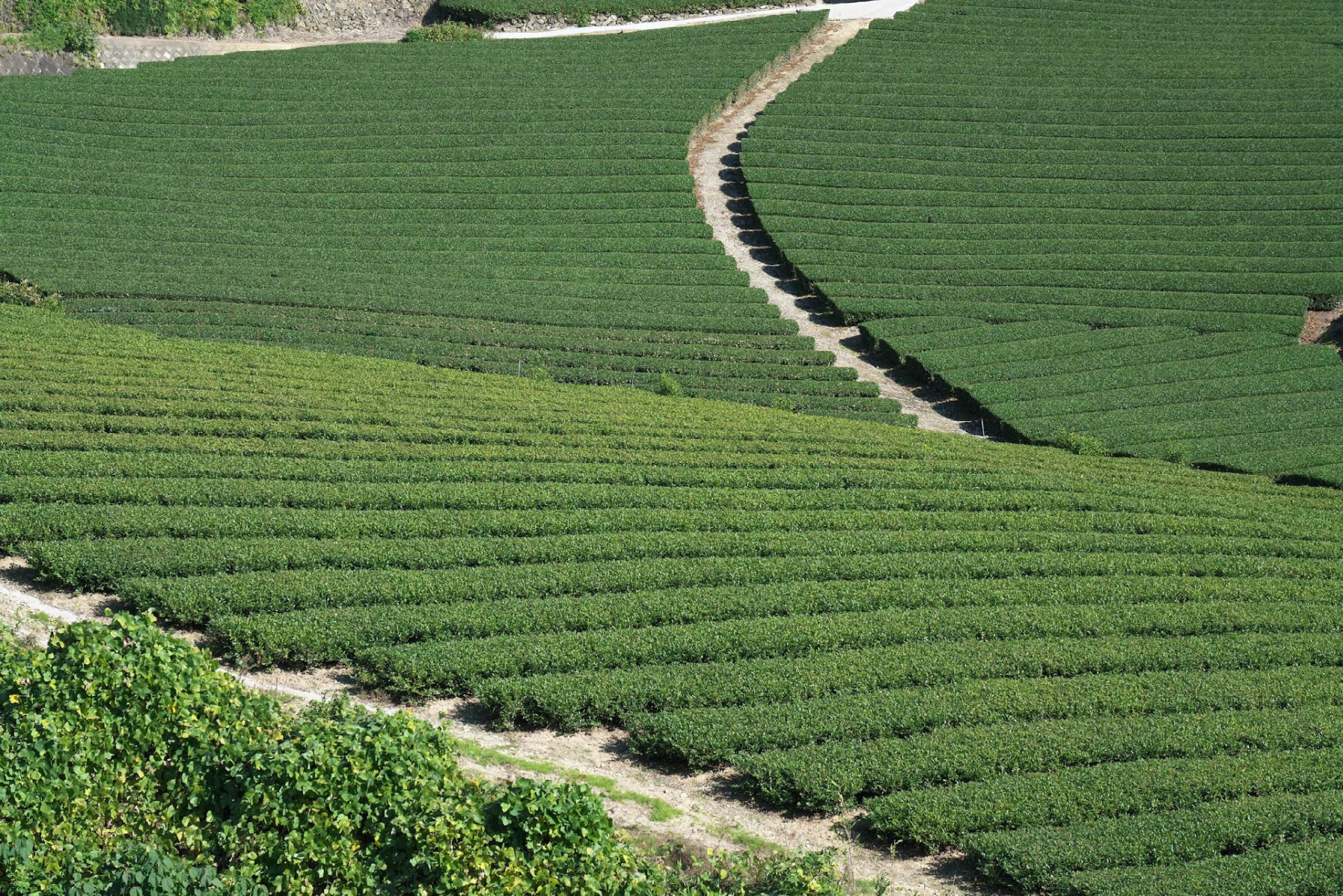
Uji sits in a basin where the Uji River meets the Kizu and Katsura rivers. Every autumn and spring, river mist rolls up into the hillside gardens, shading the young leaves naturally and keeping the air humid. Night and day temperatures swing widely, which slows the leaf and concentrates its amino acids. Beneath it all is rich, slightly acidic alluvial soil, refreshed by the rivers for centuries.
The result in the cup is what tasters look for first: a deep natural sweetness, a thick brothy umami, and remarkably little bitterness. It is why Kyoto matcha — and Uji matcha in particular — commands the highest prices at Japan's tea auctions, year after year.
The craft that hasn't changed
Uji's tencha is still shaded under traditional coverings for three to four weeks, still hand-picked during the short first-flush season in May, and still milled on granite stones turning at about thirty revolutions a minute — roughly forty grams an hour, because faster milling heats the powder and scorches its aroma. Many of the region's gardens are small family plots passed down for generations, ours included.
How to tell real Uji matcha
Genuine Uji matcha announces itself before the water touches it. The powder is a vivid, almost electric green — yellow-green or dull powder usually means later harvests or other origins. The aroma carries the sweet, marine note the Japanese call ooika, the perfume of shaded leaf. Whisked, it foams into a fine, dense crema, and the taste leads with umami and finishes sweet, without the harsh astringency of sun-grown tea.
Beyond the senses, look for the origin named plainly on the tin, a first-harvest declaration, and a producer willing to tell you which valley — and ideally which farm — the leaf came from.
Uji and the rest of Japan
Japan grows excellent matcha elsewhere — Nishio in Aichi, Yame in Fukuoka, Kagoshima in the far south, and the volcanic highlands of Kumamoto, where our organic WakabaKaze is grown. Each region has its own character: Kagoshima is bright and bold, Yame is soft and creamy, Kumamoto is mellow and gentle. Uji remains the reference point against which all of them are judged — the oldest tradition, the most demanding craft, and the flavour every matcha drinker eventually measures their bowl against.
From our garden in Uji
Every ceremonial matcha we sell — Ichiban, and our seasonal lots — is single-origin Uji: shade-grown on our family farm, hand-picked in the first flush, and stone-milled to order. Nothing blended, nothing anonymous. When you open the tin, you are tasting one valley.