Since 1861 · Uji, Kyoto
Six generations,
one valley in Uji.
A house that has tended the same fields for over a century and a half — and refuses to make tea any other way.

The Valley
Where the Uji and Kizu rivers meet.
Our fields sit in Isedacho, a quiet corner of Uji where the morning mist rolls down from the hills and lingers between the rows of tea. The two rivers cool the soil, the fog softens the light, and the leaves grow slow — exactly as they have since 1861.
For the final twenty-one days before harvest, the rows are shaded with woven covers. Starved of direct sun, the leaves push their chlorophyll deeper and sweeten into the dense emerald that gives true matcha its colour, its umami, and its quiet, lingering finish.

Origin
Uji, Kyoto, Japan
Six Generations
One family. One craft.
The house was founded in 1861, in the closing years of the Edo period — when tea was still measured by hand and ground on stone. Six generations later, the same family tends the same fields, and the current master continues the work his great-great-great-grandfather began.
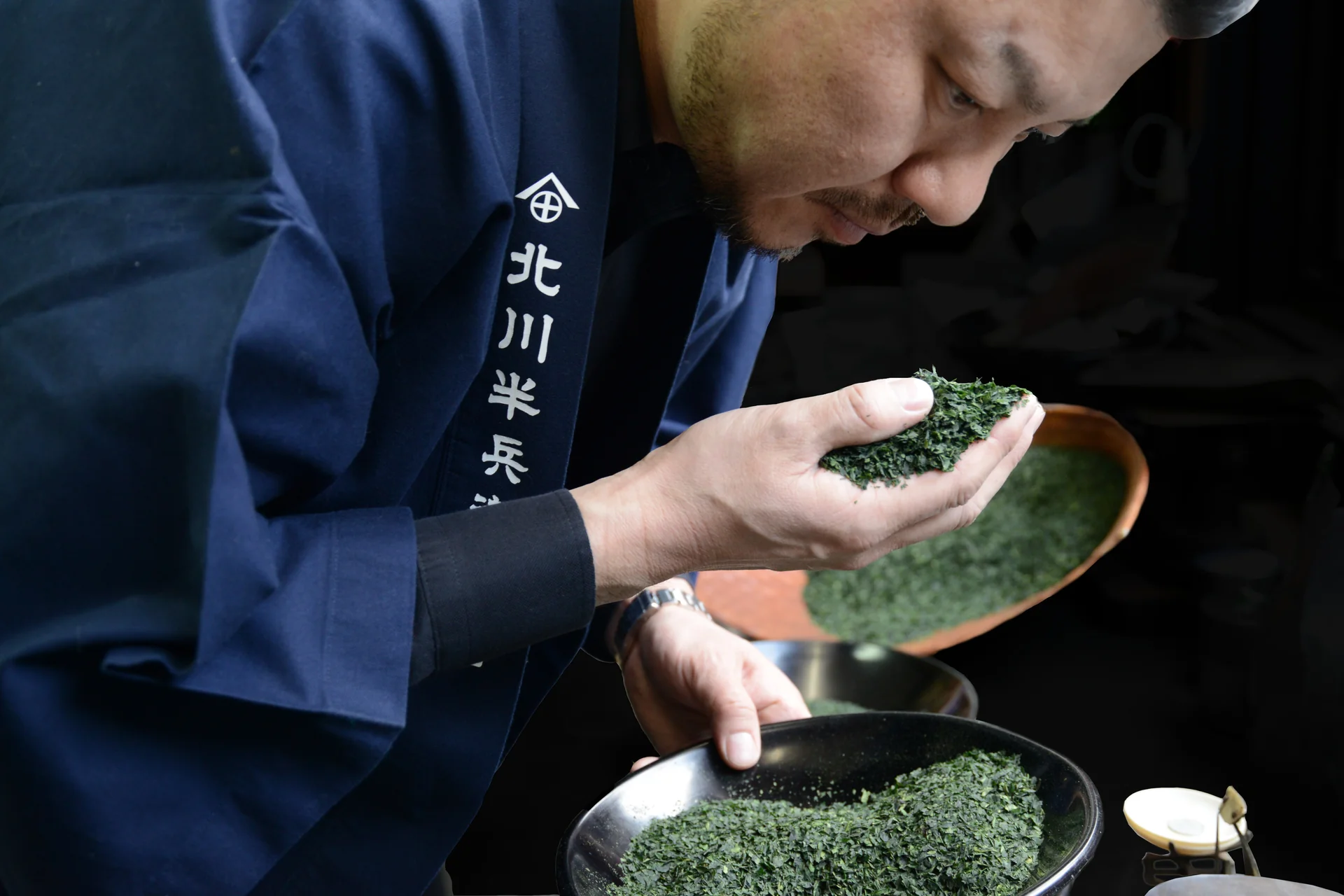
Nothing about how we make matcha has been outsourced or industrialised. Leaves are picked by hand at first harvest, steamed, dried, sorted, and aged through the summer. In autumn, the master grades and blends. Only then — once an order is placed — is the tea milled to powder.
Recognition
Eleven times honoured by Japan's
Minister of Agriculture.
Between 1974 and 2006, the house received the Minister of Agriculture, Forestry and Fisheries Award eleven times at the National Tea Fair — a quiet record built one harvest at a time, in a country that does not give such things lightly.
1861
Founded
6
Generations
11×
Minister's Award

Stone Milled
Slow wheels.
Living powder.
Granite stone mills turn at the pace of a single revolution every few seconds — slow enough that the leaves never heat, never oxidise, never lose what makes them green. A single mill produces just a handful of matcha per hour.
We mill only after your order is placed. The tin you receive was powder for days, not months — and it tastes like it.
Taste the valley.
Every tin is stone-milled to order and shipped from Uji within days.