The three rules
Water at 70–80°C. Boiling water scalds the catechins and turns a sweet bowl bitter. Off the boil, wait two minutes, or pour once between two cups.
Always sift. Matcha is fine enough to clump from static alone. A small tea strainer over the bowl takes ten seconds and removes the need to chase lumps later.
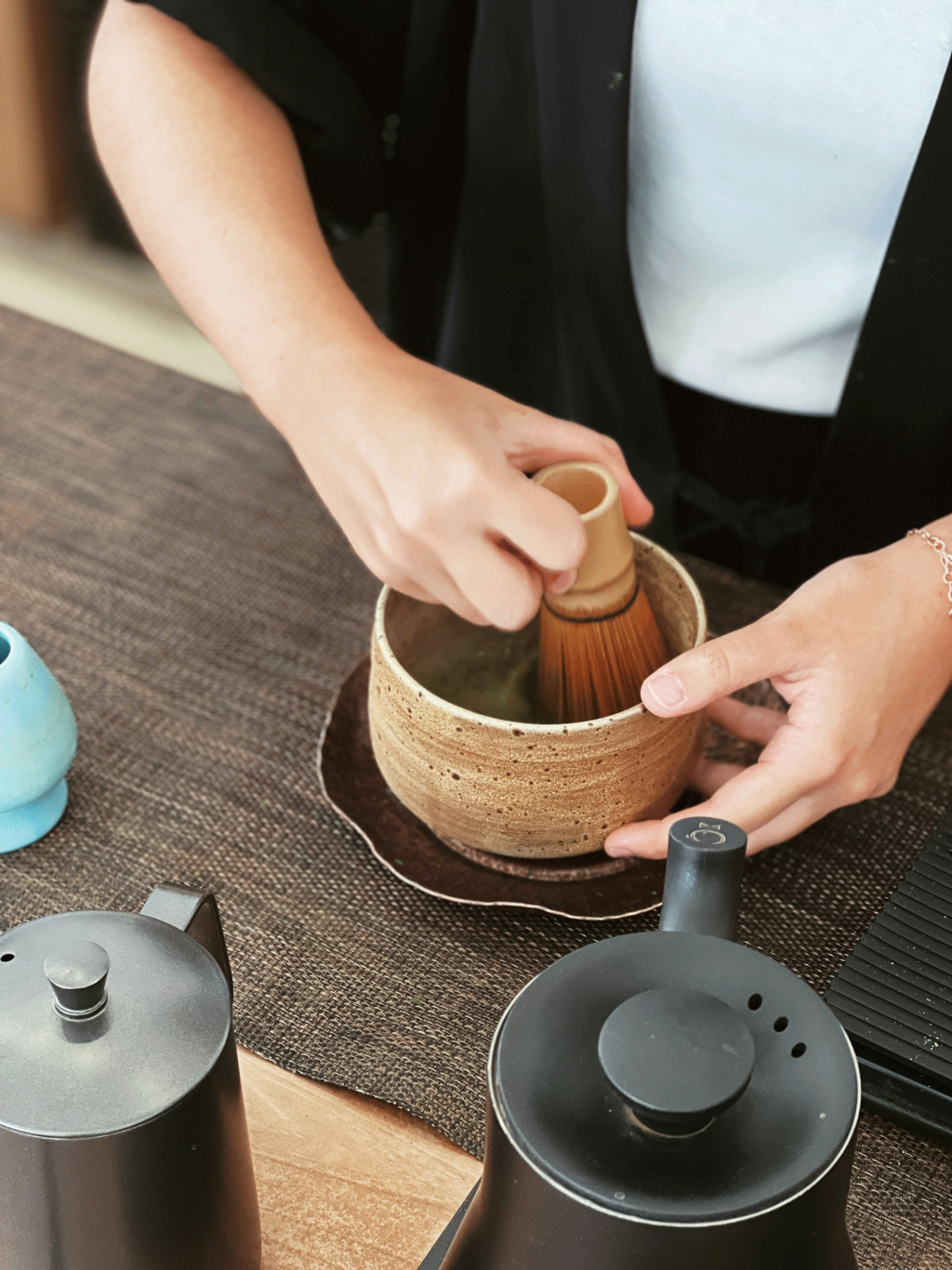
Whisk with the wrist. Fast, shallow W-strokes near the surface, not circles from the shoulder. Circles fold air out; W-strokes fold it in.
Recipes
Usucha · thin tea
2g matcha · 70ml water · 75°C
Sift, pour, whisk briskly in W-strokes for 20–30 seconds until a fine foam sits on top. The everyday bowl.
Koicha · thick tea
4g matcha · 40ml water · 80°C
Add water in two stages and knead rather than whisk, slowly, until it flows like warm honey. Only for your best powder.
Iced matcha
2g matcha · 40ml water · 60ml cold water · ice
Whisk with a little cool water first, then pour over a full glass of ice and top with water or sparkling water.
Matcha latte
3g matcha · 50ml water · 180ml milk
Whisk a concentrated shot, then pour warm or cold milk over it. Use a slightly bolder grade so the tea survives the dairy.
Troubleshooting
Bitter. Water too hot, too much powder, or late-harvest leaf. Drop to 70°C and 2g first.
Clumpy. You skipped the sieve, or the tin has absorbed moisture. Sift, and keep it sealed and cold.
No foam. Not enough water for the whisk to work (under 60ml is hard), a dry unsoaked chasen, or coarse powder. Soak the whisk in warm water for a minute before use.
Grainy at the bottom. Normal in koicha; in usucha it means the powder is coarse or the whisking stopped early.
Water matters more than you think
Soft, low-mineral water lets umami through. Hard tap water flattens aroma and can dull the colour, so filtered or bottled soft water is worth the small trouble. Never use distilled — with nothing dissolved in it, the tea tastes hollow.